The Ultimate Guide to Scalp Analyzers: Unlocking the Science of Hair Longevity
For decades, the beauty and wellness industries focused almost exclusively on the hair strand—treating frizz, boosting shine, and chasing immediate cosmetic volume. However, the paradigm shifted. The modern hair care industry operates on a core scientific truth: healthy hair cannot exist without a thriving scalp ecosystem.
Driven by the “skinification of hair,” consumers and professionals alike are no longer guessing what their roots need. Instead, they are turning to data. At the center of this movement is the scalp analyzer, a revolutionary diagnostic tool that bridges the gap between traditional trichology (the study of hair and scalp) and high-tech personalization.
Whether you are a salon owner looking to elevate your services or an individual investor exploring smart beauty technology, this definitive guide breaks down how scalp analyzers work, why they are essential, and how they are transforming modern hair health.
What is a Scalp Analyzer?
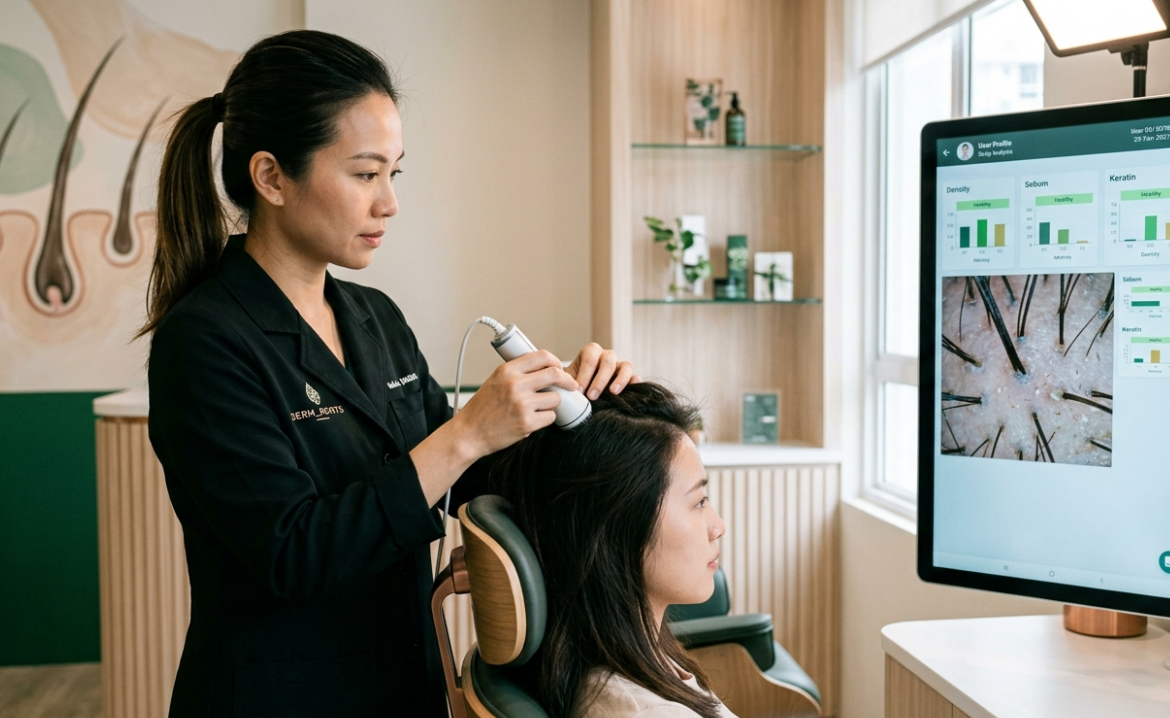
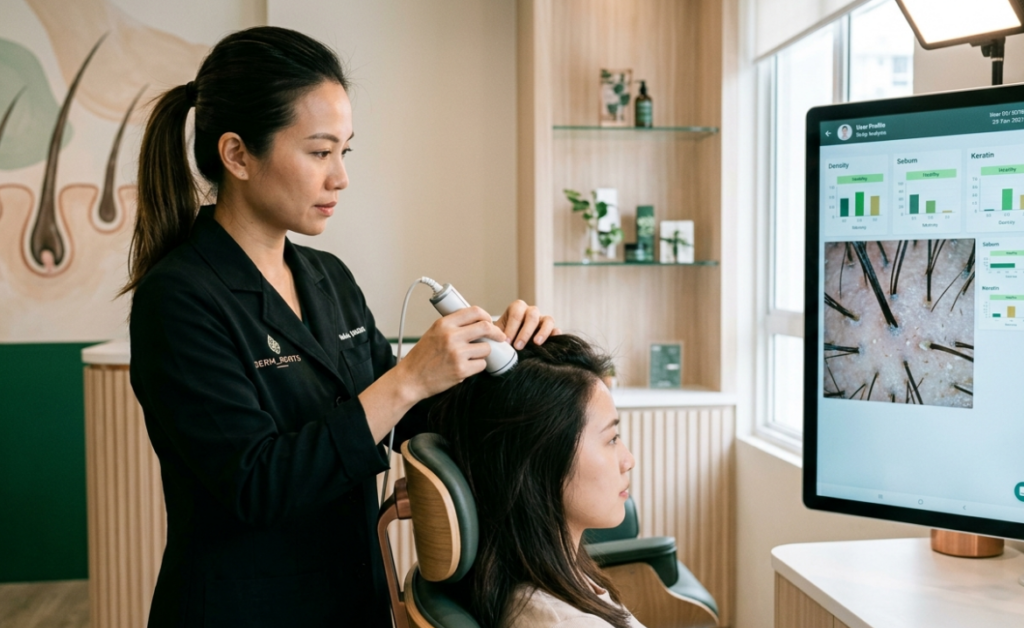
A scalp analyzer is an advanced digital diagnostic device—often combining high-definition optical lenses, specialized light-emitting diodes (LEDs), and specialized software—designed to capture micro-level images of the scalp.
Unlike a standard microscopic camera, a professional hair and scalp analyzer goes beyond basic magnification. It evaluates multiple biological parameters of the scalp tissue and hair follicles, converting visual data into quantifiable metrics.
How It Works: The Micro-Level View
Most modern analyzers utilize a combination of polarized and non-polarized light to capture distinct layers of the skin:
- Non-Polarized Light: Evaluates surface conditions, including dead skin cell buildup, flaking, and structural hair shaft details.
- Polarized Light: Penetrates deeper into the epidermal layer to detect vascular microcirculation, underlying inflammation, and latent erythema (redness).
- UV Light Mode: Safely illuminates corporate bacterial activity, porphyrin levels (signs of bacterial overgrowth), and deep-seated sebum plugs.
The Core Features of an Advanced AI Scalp Scanner
The integration of Artificial Intelligence has completely redefined what a digital scalp analyzer can achieve. Instead of a practitioner simply showing a client a magnified image and guessing the diagnosis, an AI scalp scanner references millions of data points to deliver an instantaneous, clinical-grade assessment.
When investing in a high-quality system, look for these foundational analytical parameters:
- Follicular Density Analysis: Counts the number of active hair shafts per square centimeter, identifying early signs of thinning long before it becomes visible to the naked eye.
- Hair Shaft Thickness Evaluation: Measures the exact caliber of individual hair strands to detect hair miniaturization—a key diagnostic indicator of androgenetic alopecia.
- Sebum & Moisture Balancing: Calculates the precise oil-to-water ratio of the stratum corneum to classify the scalp as oily, dehydrated, dry, or balanced.
- Keratin and Buildup Metrics: Detects hyperkeratosis (excessive dead skin accumulation) and chemical product buildup blocking the follicular ostium (pore).
- Vascular Sensitivity Tracking: Maps out areas of inflammation, capillary dilation, and general scalp irritation.
Why Every Modern Salon Needs a Smart Hair and Scalp Analyzer
Integrating a scalp analyzer camera into a salon or clinic environment is no longer just a marketing gimmick; it is an operational and economic game-changer.
From Subjective Guesswork to Objective Evidence
Traditionally, a stylist would look at a client’s hair and say, “Your hair feels dry; you should buy this moisturizing mask.” Today’s consumer is highly skeptical of generalized sales pitches. A smart hair and scalp analyzer removes the subjectivity. When a client sees their own clogged follicles or patchy inflammation on a high-definition monitor, the conversation shifts from a commercial upsell to an empirical, diagnostic recommendation.
Exponential Growth in Retail Revenue
By utilizing automated software, these devices generate a comprehensive scalp health diagnosis report that can be emailed directly to the client. These reports seamlessly connect specific scalp issues to targeted corrective treatments (such as salicylic acid exfoliators for oily scalps or peptide serums for thinning hair). This targeted approach drastically improves client trust, resulting in a documented boost in both high-ticket in-salon scalp therapies and home-care product retail sales.
Scalp Health Diagnosis: Understanding the Critical Indicators
When running a diagnostic scan via a handheld scalp analyzer, the software typically categorizes data into clear actionable insights. Understanding these metrics is vital for formulating effective treatment regimens.
| Scalp Condition | Microscopic Visual Characteristics | Primary Hair Care Target |
| Healthy & Balanced | Clean, clear, crater-like follicular openings; 2–3 thick hairs emerging from each pore; pale pink/milky white skin tone. | Maintenance, antioxidant protection, barrier preservation. |
| Sebum-Congested | Yellowish, translucent waxy plugs surrounding the hair base; glossy surface sheen; flat hair roots. | Clarifying, deep follicular detoxification, salicylic acid treatments. |
| Hyperkeratotic (Dry/Flaky) | White or silver sheets of peeling skin; dry cracks across the epidermis; dull hair shafts. | Enzymatic exfoliation, deep scalp hydration, barrier repair oils. |
| Erythematous (Inflamed) | Distinct red vascular networks; localized swelling; visible irritation around the follicle base. | Soothing botanicals (Centella Asiatica), anti-inflammatory serums, avoidance of harsh surfactants. |
Choosing the Right Device: Handheld vs. App-Integrated Tools
The market offers several tiers of analysis technology depending on your business model or personal needs.
1. Professional Wireless Handheld Scalp Analyzers
Designed for premium head spas, trichology clinics, and upscale salons, these standalone devices connect via Wi-Fi or Bluetooth to dedicated tablets or desktop monitors. They offer multi-spectral imaging lenses, extreme magnification capabilities (ranging from $50\times$ to over $200\times$), and highly secure customer database systems to track a client’s “Before and After” progress over months or years.
2. Mobile-Connected Hair Analysis Apps
As consumer demand for at-home wellness surges, compact scalp analyzer hardware that attaches directly to a smartphone camera is rising in popularity. Driven by a dedicated hair analysis app, these accessible options allow remote consumers to monitor their sebum levels or track hair density improvements from home, providing cosmetic brands with an excellent direct-to-consumer digital touchpoint.
The Future of Scalp Analysis: What to Expect Next
As we move deeper into the era of bio-available “hairceuticals” and personalized wellness, scalp diagnostics are becoming increasingly predictive. Future iterations of AI systems will not only analyze current inflammation or oiliness but will also leverage massive global databases to predict progressive hair thinning or shedding patterns up to two years before they manifest physically.
Furthermore, integration with smart mirrors, advanced low-level laser therapy (LLLT) devices, and customized modular formulation systems will ensure that the automated data extracted from a simple 60-second scalp scan will directly dictate the precise chemical composition of a consumer’s personalized daily shampoo.
The scalp analyzer has redefined the foundation of modern hair care. It has transformed a blind, one-size-fits-all product industry into a precise, data-driven science. By visualising the invisible, these devices empower professionals to prescribe with accuracy and inspire consumers to invest in long-term root health.
If you are ready to future-proof your hair care business or elevate your diagnostic credibility, adopting a high-precision AI scalp scanner is the ultimate step forward. Stop guessing at the hair strand—and start analyzing at the root.